

 0409347579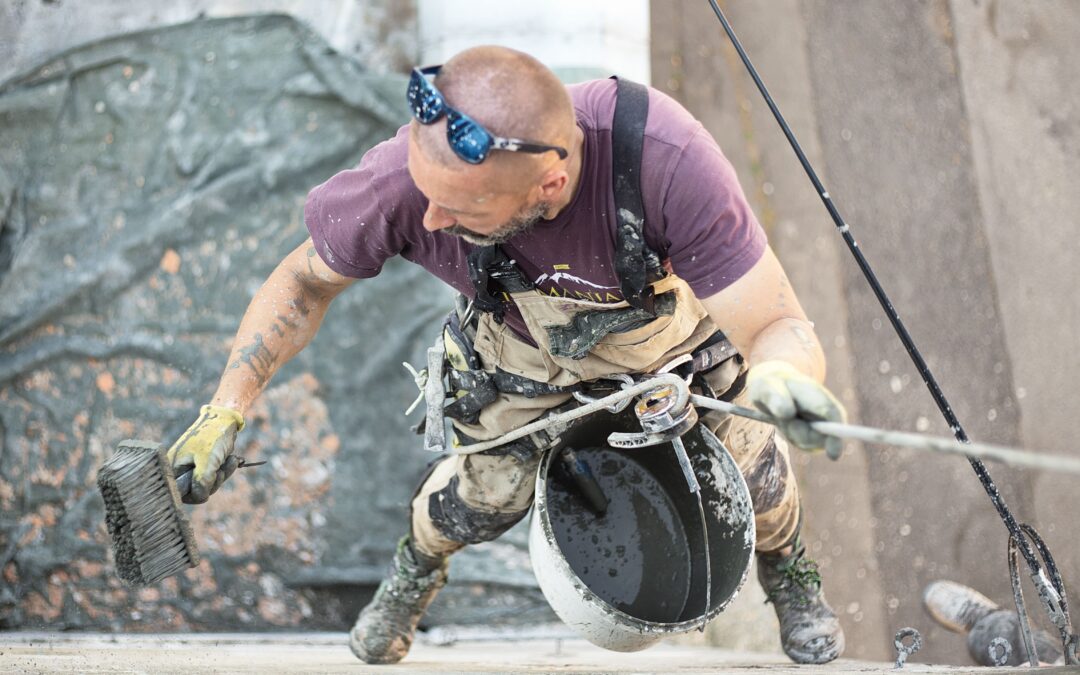
When maintenance work needs to be carried out several storeys above the ground, one of the first questions is how technicians will safely reach the work area. For building owners, facility managers and body corporates, the choice often comes down to rope access vs scaffolding.
Both methods have an important place in building maintenance. Scaffolding creates a stable temporary working platform and can be particularly useful for extensive projects requiring prolonged access. Rope access, on the other hand, allows trained technicians to reach difficult areas using specialised ropes, harnesses and positioning equipment, often without surrounding a building in temporary structures.
For many inspection, cleaning, repair and painting projects, professional rope access in Adelaide can provide significant advantages in speed, flexibility and reduced disruption. However, the right solution always depends on the building, the work involved and the applicable safety requirements.
Here is what Adelaide property managers and building owners should consider when comparing the two.
What Is Rope Access?
Industrial rope access is a specialised method of working at height in which trained technicians use ropes, harnesses, anchors and other equipment to safely reach and position themselves at a work location.
Unlike scaffolding, the system generally does not require a large temporary structure to be erected around the building.
This makes rope access particularly valuable for areas that are difficult to reach using conventional access equipment. Safe Access Specialists uses rope access across high- and low-rise buildings and other structures for services including inspections, maintenance, repairs, painting, glazing and window cleaning.
Professional training is an important part of the system. Safe Access Specialists’ technicians are IRATA trained, providing clients with qualified personnel for specialist work at height.
What Is Scaffolding?
Scaffolding is a temporary structure assembled to create platforms from which workers can carry out work at height.
It is widely used throughout construction and maintenance because it can provide workers with a stable platform and convenient access to a large working area.
Scaffolding can be particularly appropriate when a project requires several trades to work in the same area for an extended period, when substantial quantities of materials and equipment are required at height, or where the project’s risk assessment determines that a fall-prevention system such as scaffolding is the appropriate control.
In South Australia, scaffolding work involving a platform from which a person or object could fall more than four metres is classified as high-risk work and requires the appropriate high-risk work licence.
Rope Access vs Scaffolding: The Main Differences
Although both methods allow maintenance teams to work at height, they operate very differently.
- Setup Time
One of the clearest advantages of rope access is its relatively small setup requirement.
A scaffold may require equipment delivery, assembly, inspection and eventual dismantling. Depending on the building and scope of work, this can add considerable time before maintenance itself begins.
Rope access systems can often be established much more quickly by an appropriately trained team after the necessary planning, risk assessment and anchor arrangements have been completed.
For relatively short jobs such as façade inspections, window cleaning, sealing or targeted repairs, avoiding extensive temporary access structures can significantly improve project efficiency.
Safe Access Specialists describes industrial rope access as quicker than traditional scaffolding or swinging-stage access for many of the maintenance applications it undertakes.
- Cost Efficiency
Cost is another major consideration in the rope access vs scaffolding comparison.
With scaffolding, clients may be paying not only for the actual building work but also for transporting, erecting, inspecting and dismantling the temporary structure.
Those costs can make scaffolding less economical for smaller or highly targeted jobs.
Rope access generally requires substantially less access infrastructure. Technicians can move directly to the required location using their rope systems rather than constructing platforms across areas of the building that may not require attention.
As a result, rope access can be a cost-effective option for many inspections, cleaning jobs, repairs and maintenance projects. Safe Access Specialists specifically positions its rope access services as a cost-effective alternative to traditional scaffolding and swinging stages.
That does not mean rope access will always be cheaper. Large projects involving heavy materials, multiple trades or long periods working in one location may make scaffolding the more practical choice.
The important point is to assess the access requirements as part of the overall project rather than automatically specifying scaffolding.
- Access to Difficult Locations
This is where industrial rope access really comes into its own.
Modern buildings frequently contain architectural features that are difficult to reach from conventional platforms. Recessed façades, narrow spaces, overhangs, curved surfaces and complex elevations can all create challenges.
Rope access technicians can reposition themselves across different parts of a structure without requiring a continuous platform.
The technique is not limited to skyscrapers either.
Professional rope access can be used on:
- Commercial buildings
- Apartment complexes
- Warehouses
- Stadiums
- Bridges
- Towers and antenna structures
- Low-rise buildings with difficult access
- Other complex structures
Safe Access Specialists works across buildings and structures where conventional access can be difficult, including low-rise buildings, bridges and other specialist structures.
- Disruption to Occupants and Businesses
Building maintenance can become inconvenient when access equipment occupies footpaths, entrances, loading areas, courtyards or other important parts of a property.
Scaffolding can remain installed for days or weeks depending on the project. On busy commercial properties, its physical footprint may require additional planning around pedestrian movement and building operations.
Rope access generally has a much smaller ground-level footprint.
For an office building, apartment complex, hotel or retail property, this can mean less interference with normal operations while maintenance is underway.
Safe Access Specialists highlights minimal disruption as one of the benefits of its rope access approach, particularly compared with scaffolding and cradle-based systems.
- Safety Considerations
Safety should never be reduced to a simple claim that one access method is universally “safer” than another.
Australian work-at-height requirements follow a risk-management approach. Where work cannot reasonably be carried out from the ground or solid construction, fall-prevention devices such as scaffolding are considered before work-positioning systems such as industrial rope access. The appropriate solution therefore depends on what is reasonably practicable for the specific job.
Industrial rope access also requires a high level of competency from workers and supervisors. SafeWork SA specifically identifies industrial rope access as a work-positioning system and notes that these systems require relevant competency-based training.
This is why building owners should engage experienced, properly trained specialists rather than treating rope access as simply “abseiling with tools.”
Safe Access Specialists uses IRATA-trained technicians and places safety at the centre of its high-rise maintenance approach.
- Impact on the Building
Another advantage of rope access is that it can be relatively unobtrusive.
A large scaffold installation may interact with substantial areas around a building and can affect entrances, façades and surrounding spaces while installed.
Rope access equipment is considerably more compact.
This can be particularly useful when maintenance needs to be performed on occupied commercial or residential properties where keeping the building accessible and presentable matters.
For jobs such as window cleaning, façade inspections, minor painting, joint sealing or individual repairs, technicians can often access the relevant section without covering the entire elevation with scaffolding.
- Suitability for Different Maintenance Tasks
The best access system also depends on what actually needs to be done.
Rope access is particularly well suited to tasks such as:
- High-rise window cleaning
- Façade inspections
- Building condition assessments
- Painting and touch-ups
- Glazing work
- Leak investigation
- Caulking and sealing
- Minor façade repairs
- Difficult-to-access maintenance
Scaffolding may be more appropriate when:
- Extensive work is required across an entire façade
- Workers need a large platform for prolonged periods
- Heavy materials or equipment must remain at the workface
- Multiple workers or trades require continuous access
- The project’s safety assessment determines scaffolding is the appropriate fall-prevention measure
Scaffolds provide a stable working platform, which is why they remain an important part of construction and building maintenance.
The question is therefore not whether scaffolding is obsolete—it clearly isn’t. The question is whether constructing a scaffold is necessary and appropriate for the particular maintenance task.
Which Is Better for Adelaide Building Maintenance?
There is no single access system that is right for every building.
For major construction or refurbishment work requiring large platforms, substantial materials and prolonged access, scaffolding can be the appropriate solution.
For inspections, cleaning, painting, glazing and targeted repairs in difficult-to-access areas, however, rope access in Adelaide can offer compelling advantages.
It can reduce setup requirements, minimise disruption and allow skilled technicians to move efficiently around complicated structures.
This makes rope access particularly attractive for ongoing building maintenance, where the objective is often to reach a specific problem area, complete the necessary work and leave the property with minimal interruption.
Why Choose Safe Access Specialists for Rope Access in Adelaide?
Working at height demands experience, specialist equipment and a strong safety culture.
Safe Access Specialists provides professional industrial rope access services for buildings and difficult-to-access structures throughout Adelaide.
With more than 15 years of experience highlighted by the company and a team of IRATA-trained technicians, Safe Access Specialists provides services ranging from high-rise window cleaning and painting to inspections, glazing, repairs and ongoing building maintenance.
The ability to tailor the access solution to the building is particularly important. Instead of assuming every high-level maintenance project requires extensive scaffolding, the team can assess how difficult areas can be reached efficiently while maintaining appropriate safety standards.
Rope Access vs Scaffolding: The Bottom Line
When comparing rope access vs scaffolding, the answer depends on the nature and duration of the maintenance work.
Scaffolding provides a stable platform and remains highly valuable for large, prolonged or material-intensive projects. Rope access provides a flexible alternative that can be particularly effective for targeted maintenance, inspections, cleaning, repairs and painting on difficult-to-access structures.
For many Adelaide property owners and facility managers, the biggest benefits of rope access are straightforward: less access infrastructure, quicker mobilisation for suitable jobs, excellent reach and reduced disruption around the property.
If your building requires inspection, cleaning, painting or repairs at height, Safe Access Specialists can assess the access challenges and recommend an appropriate approach.
Visit Safe Access Specialists to learn more about professional rope access Adelaide services and discuss the requirements of your building.